Showing posts with label Captain America. Show all posts

Friday, February 2, 2018

Review- MARVEL MASTERWORKS: GOLDEN AGE ALL-WINNERS VOL. 4


MARVEL MASTERWORKS: GOLDEN AGE ALL-WINNERS VOL. 4 (Marvel, First Printing, 2011; Hardcover)

Collects All-Winners Comics #15-19, 21, Vol. 2 # 1 (cover dates Spring, 1945- August, 1948)

Writers: Bill Finger, Otto Binder, William Woolfolk, and other unidentified writers

Artists: Alex Schomburg (covers), Mort Lawrence, Art Seymour, Al Bellman, Vince Alascia, George Klein, Al Avison, Clem Weisbecker, Mike Sekowsky, Maurice Gutwirth, Syd Shores, Allen Bellman, Mort Leav, Carl Burgos, Al Gabriele, Bob Powell, Louis Ferstadt, Carl Pfeufer, and other unidentified artists


Superheroes weren't selling very well after World War II. With the wind taken out of their sales, these comics come off as also rans, plodding along with writing and artwork that was vastly inferior to the earlier issues in this series.


By the time that we reach #17 there is a massive uptick in quality. Gone are the rush jobs done by the second tier comic book journeymen of the day, in is the more refined artwork by the likes of Al Avison, George Klein, and others. The writing in that issue is also head and shoulders above the previous two collected in this volume. Issue 18 is even better than #17.


Unlike DC's Justice Society Of America over in All-Star Comics, the All Winners Squad didn't really work together as a team until #19. This issue aped the JSA formula so well that had they employed it earlier they might have saved the title. There was no #20, and #21 occurred because the title took over the numbering from another title. 

Don't worry, kids! Those gorillas which Bucky is gunning down turned out to be wearing bullet proof vests later...not that Bucky knew it at the time. No PETA in the 1940s.

This was a common practice back among magazine publishers then, as they had to pay to file a new magazine title with the Post Office. Ditching titles while keeping numbering was common through the 1960s. This makes the relaunched #1 in 1948 even more curious. Was it a last ditch effort to save the series? An oversight? We can only guess now, as nearly everyone who worked on these comics is dead and gone. Record keeping wasn't much of a consideration in the comic world back then.

The Human Torch gives The Gay Blade a what-for in 1948.

#21 sees the All Winners Squad battle Future Man, a menace from the year One Million AD. He gives the team a run for their money. The relaunched #1 from 1948 was the best issue out of all four volumes in this line of books. We finally get to see the Blonde Phantom! I would love to read more of her exploits. Alas, Marvel has mothballed all plans for this Golden Age line of Masterworks, citing the unwelcome combination of soft sales and high restoration costs. I hope that they reverse that decision one day, as there is a lot of material that deserves to be restored and rereleased.
Junk Food For Thought rating: 3.75 out of 5.


The OCD zone- This is the part where I go into tactile sensations and materials of physical media. Those with heart conditions, high blood pressure, or women who are pregnant should exit my blog at their earliest convenience, as their safety cannot be guaranteed beyond this point.

Linework and Color restoration: Think of the post-2007 Masterworks as definitive Blu-Ray editions, with painstakingly restored linework and a color palette that is 100% faithful to the source material. Those who claim that the colors miss the “artistic choice” of so- called Ben Day dots are nuts.

Paper stock: Thick semi-glossy coated stock.

Binding: Rounded book casing and Smyth sewn binding allow this book to lay completely flat in one hand as Godzilla intended.

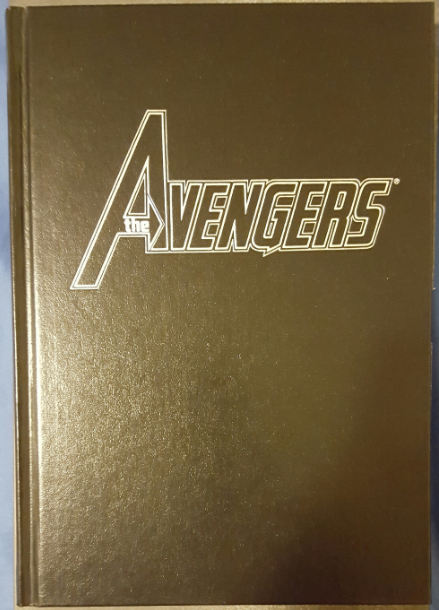
Dustjacket and Hardback cover notes: Spot varnish on the dustjacket, faux leather casewrap with dye foil stamping.

Saturday, August 26, 2017

Review- SECRET EMPIRE PRELUDE


SECRET EMPIRE PRELUDE (Marvel, First Printing, 2017; Softcover)

Collects Captain America #21, 25, Captain America: Sam Wilson #7 (first story) and 8, Assault On Pleasant Hill: Alpha and Omega, and Captain America: Steve Rogers #1, 2 (cover dates August, 2014- August, 2016)

Writers: Rick Remender and Nick Spencer

Artists: Nic Klein, Carlos Pacheco, Stuart Immonen, Mariano Taibo, Wade von Grawbadger, Jesus Saiz, Daniel Acuna, Angel Unzuenta, Matt Yackey, and Paul Renaud

Colorists: Dean White, Veronica Gandini, Marte Gracia, Dono Sanchez-Almara, and Matthew Wilson

My son checked this out from our local library and wanted to read it with me. I am fortunate to have a library system which has a decent graphic novel section and that gets in many key event books like this. It saves me money, and since I don't buy much in the way of modern Marvel anymore it helps me to at least get a feel for what is going on in the Marvel Universe these days.

This book is double dip city for those of you unfortunate enough to be completists. These issues were mostly collected across various books in a couple of lines. I'm going to leave that fact right there and go forward with this review as a book, leaving my cynical cash grab critique aside.

I found the whole concept of Kobik to be fascinating, but Nick Spenser telegraphs things a mile away with her. Spenser does manage a few twists in spite of this. I enjoyed the build-up and subsequent execution of the Pleasant Hill arc. The Falcon is Captain America for much of this book, as Steve Rogers gets stripped of his Super Soldier Serum by The Iron Nail in the beginning of the book. I don't have a problem with The Falcon as Cap, as Steve Rogers as well as The Winter Soldier/Bucky, also a former Cap, are in tow. The Falcon handles things differently than Rogers, but everyone knows that this was not a permanent change.


All of the modern day doppelganger heroes are involved in the final battle on Pleasant Hill. The new Quasar is revealed, this time a female who is handled the mantle by Wendell Vaughn, the original Quasar (itself a reinvention of Marvel Boy from the 1950s). Will this new Quasar amount to anything? Probably not, since no version of Quasar or Marvel Boy ever made it above C-lister status.

Kobik is used to fix Steve Rogers as Cap as well as restore Sin, the daughter of The Red Skull, back to her former self. Of course anyone with half a brain has figured out who the identity of the woman who has inserted herself into Steve Roger's childhood memories is, and what she is going to do.


Spenser telegraphs everything, but not before stopping to smell the roses with ham-fisted virtue signaling. His attempts to make The Red Skull sounding like Donald Trump misses the mark, as Social Justice Warriors (SJWs) almost always do. SJWs believe that it is wrong to love your country or for people to want jobs to return to America. They are so brainwashed by globalist socialists like Jeff Bezos who have convinced them lower wages and a lower standard of living are a good thing that they label anyone who disagrees with them a racist/sexist/homophobe/etc. There are no absolutes, kids. No one political party is going to save you, and identity politics cost the Democratic Party The White House in 2016. Sorry to disillusion you, but the truth hurts.

All said and done this was an entertaining read with a mixed bag of artwork. I am always very careful to keep my comic critiques to myself when reading these with my son, as I like for him to form his own opinions and tastes on things.

My ten year old son's take: It was good. It didn't use very man swears, so that's good. The storyline was really good. My favorite part was when the alien ( the Iron Nail) stung Captain America and he lost his youth. He was surprised When Father Patrick turned out to be The Red Skull and The fact that Steve got his youth back at the end.

This is his golden age of comics. These will be the stories that he refers to as examples of greatness. These poor kids. Nick Spenser is their good old days. God help us all.
Junk Food For Thought rating: 3.75 out of 5.

The OCD zone- Library books are always fascinating case studies of the workmanship and durability of the materials used in these books. Most of my books will be read once if they are lucky. Maybe I will donate my whole collection to a library when I am old.
Paper stock: Glossy coated stock.
Binding: Perfect bound trade paperback.
Cardstock cover notes: Laminated coated stock. 

Sunday, February 19, 2017

Review- MARVEL MASTERWORKS: THE AVENGERS VOL. 11


MARVEL MASTERWORKS: THE AVENGERS VOL. 11 (Marvel, First Printing, 2011; Hardcover)

Collects Avengers #101-111 and Daredevil #99 (cover dates July, 1972- May, 1973)

Writers: Roy Thomas and Steve Englehart with Harlan Ellison, Chris Claremont, Stan Lee, and Steve Gerber

Artists: Pencilers- Rich Buckler, John Buscema, George Tuska, Jim Starlin, Don Heck, and Sam Kweskin; Inkers- Dan Adkins, Joe Sinnott, Jim Mooney, Dave Cockrum, Frank McLaughlin, Mike Esposito, Frank Giacoia, and Syd Shores.


In this volume we find The Vision and the Scarlet Witch become the focal point for the series. Thomas builds on The Vision's discontentment with his lack of humanity in #102 while introducing a foe who soon-to-be Avengers writer Steve Englehart would use quite often: The Grim Reaper. The Grim Reaper was the brother of the late Wonder Man, whom the Vision's android brain patterns were modeled after. The Grim Reaper offers The Vision his deceased brother's body, which is in a form of stasis, in exchange for him standing aside while he destroys the team to revenge his fallen brother.

While all of that is happening, we see the return of The Sentinels, who have returned to Earth to save humanity from the “threat” of mutantkind. I dig this aspect of Silver and Bronze Age Marvel. The true shared universe aspect, where one hero's villains turn up in another magazine. There didn't have to be some lame tentpole event series with umpteen crossover titles to make it feel that way, either. The shared universe wasn't just implied, it was successfully implemented in an organic way. The suspension of disbelief was easy during this era.


Roy Thomas hands the title off to Steve Englehart with issue 105 after his Sentinels three-parter. Unlike today's comics, The Avengers were left with no time to catch their breaths before being called into action again, this time to the Savage Land. Having scooped up the Black Panther and losing Quicksilver in the previous issue, the team fights another Thomas/Adams X-Men era foe: the Savage Land Mutates: Gaza, Barbarus, Equilibrius, Amphibius, Lupo, Lorelei, and Brainchild. These comics are so action packed and fun to read. Comics without a whiff of self awareness or irony are refreshing when compared to today's hamfisted soapboxes.


#106 is a reframed Captain America inventory story that ties up a dangling plotline from a few issues earlier: The Vision and his desire for humanity. In one of those convoluted, it makes sense because everyone was stoned back then kind of way, the Grim Reaper's partner is none other than the Space Phantom. What makes it even more bizarre is that they use the inventory story as an even more confusing backdrop, inserting the Space Phantom disguised as the head of Hydra for the time being because he was biding his time in order to destroy The Avengers. None of it makes any sense to me either, but it was a blast to read nonetheless.

This “arc” is resolved in #108, which also neatly ties up the Vision and his desire to be human. He and the Scarlet Witch profess their love for one another at the end of that issue, setting the stage for a bizarre human-synthezoid relationship that will culminate in The Celestial Madonna storyline. I read the old trade paperback of that a decade or so ago, and look forward to rereading it remastered in “high def” in the Masterworks. I already own that volume, but it's the whole finding time to read everything that is the challenge. My backlog is like fine wine, aging to perfection. The older and more out of print a book is, the more enjoyable it is to read.


#109 and 110 tie up the loose ends of the Savage Land adventure from a few issues earlier, revealing Magneto to be behind it all while bringing The X-Men into the proceedings as well. Remember, The X-Men were cancelled, with their title being relegated to a reprint series. Writers like Englehart kept them alive, limping along from guest spot to guest spot until Len Wein and Dave Cockrum would give rebirth to the series in 1975. These two issues lead into Daredevil #99, acting as a way to get rid of Hawkeye and bring back the Black Widow, who has been Daredevil's love interest and co-star in that series during that time. #111 wraps up the Magneto/X-Men/Savage Land saga nicely.


The writing is great, while the art is uneven. It starts out very strong. Rich Buckler, an underrated artist if ever there were one, nails the Marvel house style of the era. I'll take this aesthetic over what passes as comic art any day of the week. Jim Starlin and Dave Cockrum aid and abet, adding their polish to various issues. Things go south with the then over-the-hill Don Heck, who phones in weak artwork with weak inking by various folks. Don Heck did some solid work, it's just that this ain't it.

Forget ham-fisted “writers” who write endless pages of talking heads Avengers sitting around a breakfast table. These Avengers save the world on a daily basis, giving the bad guys a what for in the process. I urge folks to pick up some real Avengers comics and see for yourselves.
Junk Food For Thought rating: 4.5 out of 5.

The OCD zone- Marvel Masterworks remain my poison of choice. Indeed, they are the reason that I reentered this accursed hobby lifestyle.
Linework and Color restoration: Marvel Masterworks are the Criterion Blu-Rays of collected editions. Top shelf restoration and a color palette faithful to the original comic books, all lovingly restored to the highest standards. Make mine Marvel Masterworks!
Paper stock: Thick coated stock with a slight sheen.
Binding: Smyth sewn binding. Lays flat.


Dustjacket and Hardback cover notes: Dustjacket has a lamination as well as spot varnish. The hardback casewrap has a faux leather texture with dye foil stamping on the front cover as well as the spine. 


Thursday, September 15, 2016

Review- CAPTAIN AMERICA AND THE FALCON: NOMAD


CAPTAIN AMERICA AND THE FALCON: NOMAD (Marvel, First Printing, 2006; Softcover)

Collects Captain America #177-186 (cover dates September, 1974- June, 1975)

Writers: Steve Englehart with John Warner
Artists: Sal Buscema, Frank Robbins, and Herb Trimpe with Inking by Vince Colletta, Joe Giella, Frank Giacoia, and Mike Esposito


Steve Rogers has quit being Captain America, leaving The Falcon flying solo. Things start out with a ridiculous, it could only happen in the '70s storyline where C-Lister Lucifer returns to our dimension. He ends up spotting a store and, missing our Earthly food, breaks into it and eats a snack cake that bears more than a passing resemblance to a Twinkie. I swear that everyone that worked at Marvel in the '70s was high, because a chemical in the snack cake causes Lucifer to slip back into his own dimension. He quickly possesses another body, but sensing that he is burning out the frail human form, decides to split his power across two humans. Again, everyone was high back then, because these are some overly labored stories. I have a soft spot for Englehart's writing in spite of his flying by the seat of his pants because he is so stoned and has no idea where he is going style of writing.

Issue 179 shows Hawkeye return a favor to Steve Rogers. By posing as a villain called The Golden Archer, Hawkeye convinces Steve to become a superhero once again. This issue has a DC Silver Age feel to it. #180 finds Steve reinventing himself as The Nomad, a man without a country. Tapping into the zeitgeist is what Englehart did best. Everyone was disillusioned with America in 1974, with the Viet Nam War and the Watergate scandal. Steve Rogers decides that he can no longer be the symbol of a country and Government that he no longer trusts. Nomad's first battle is with the Serpent Squad, who by the end of that issue team up with Warlord Krang to use the lost Serpent Crown of Lemuria to enslave the entire world. One thing is for sure, villains in the Bronze Age of comics went in large or they stayed home. No two bit heists in the '70s.

#182 and 183 are marred for me by Frank Robbins' overly cartoony artwork. I loved his stuff as a kid, as he did many of my 1980s quarter box finds favorites (Adventure Into Fear with Morbius The Living Vampire, Man From Atlantis, etc.). I find that his work leaves me cold as an adult. I know that I am in the minority, but I dislike his art.

This is all revealed to be the grand scheme of none other than The Red Skull. It is fitting that Steve Rogers faces The Red Skull as his first battle after becoming Captain America, as he was the villain that Cap fought in his first issue back in 1941. As a nod to that issue, the Skull once again plays Chopin's Funeral March before murdering his victims with an overly elaborate and dramatic method.

I was severely disappointed with the ending of this book, as the Red Skull convinces Cap that The Falcon was really his sleeper agent all this time. While we know that this wasn't the case, it was the plot that Steve Englehart envisioned and it stuck for a time before someone else thankfully ret-conned it away later.

Frank Robbins' cartoony artwork is occasionally effective.


The writing was very good and the art was a mixed bag, but all in all I had a good time reading these comics. The Bronze Age are seldom considered a high point in the history of the artform, but I enjoy these comics for their sheer lack of self-importance. The people who made these comics didn't even care enough to take themselves or the material too seriously, which is something that is healthy for everyone to do once in a while.
Junk Food For Thought rating: 3.5 out of 5.

The OCD zone-
Linework and Color restoration: Some issues look better than others, but overall this is a serviceable restoration job with the original color palette maintained for the most part.
Paper stock: Matte coated stock of sufficient thickness and weight. This is the same stock found in the softcover Marvel Masterworks and Epic line books. This paper is my favorite paper used in any collected editions published by any company.
Binding: Perfect bound trade paperback.
Cardstock cover notes: Laminated cardstock cover.

Friday, September 2, 2016

Review- CAPTAIN AMERICA AND THE FALCON: SECRET EMPIRE


CAPTAIN AMERICA AND THE FALCON: SECRET EMPIRE (Marvel, First Printing, 2005; Softcover)

Collects Captain America #169-176 (cover dates January- August, 1974)

Writers: Steve Englehart and Mike Friedrich
Artists: Sal Buscema with Inking by Vince Colletta and Frank McLaughlin


The recent announcement of a forthcoming new printing of this book in early 2017 embarrassed me into reading this, which has sat unread in my backlog for years. Captain America is a character who was launched as a political concept tied into the zeitgeist, so it makes perfect sense for the character to become disillusioned with America during a time when America became disillusioned with itself. The Viet Nam War and Watergate weighed heavily on the minds of the populace, and the white hat/ black hat nature of our country from three decades earlier had faded. We were no longer in the right, and our then-brave new world left Captain America feeling lost at sea.

Things start out with Cap catching a commercial on the television discrediting him, paid for by the Committee To Regain America's Principles. In reality they are the Secret Empire. The Secret Empire baits Cap into action, setting him up in fights with Silver Age C-lister the Tumbler, going so far as to film Cap “murdering” him. The Committee, who speaks out against costumed vigilantes, bring in their own “hero” to fight on the side of the law, Moonstone. This would be the original, male Moonstone, whom I had no idea existed until I read this. Cap gets arrested by Moonstone while his partner, The Falcon, journeys to Wakanda to visit the Black Panther to see about boosting his power. The Falcon did not yet have his trademark wings. Those debuted in #170.


The Secret Empire again frames Cap, this time by breaking him out of prison and arranging for Moonstone to again fight and apprehend him. The Falcon returns just in time to join in on this battle, but both heroes get defeated and captured. They end up escaping and, using one of the most insane set of clues ever, use Moonstone's drawl and country music references to stereotype him as a Nashville resident. I'm not a very politically correct guy, but isn't this kind of racist to assume that just because someone has a drawl and references country music that they would be from Nashville? I dunno, this century confuses me. Maybe it is a micro-aggression or a macro-aggression. Who knows.


While in Nashville Cap and the Falcon run into the then-villain Banshee, who was being tailed by The X-Men. Professor X, Cyclops, and Marvel Girl were also hot on the tail of the Secret Empire. In some convoluted, it-makes-sense-because-everyone-was-high-in-1974 kind of way, the Secret Empire were capturing mutants to use their brain energy to power some bizarre machine. This being the Cold War, there is of course some giant robot for our heroes to fight.


The heroes win the battle but lose the war. Captain America is so disheartened with how easily the public turned against him, wishing to believe the worst about him, that he decides to quit being Captain America. This sets the stage for the next book in this line, Nomad, which I have also now read and will be reviewing for you soon.

I have always enjoyed Englehart's writing, and Sal Buscema turns in his usual solid work. The Bronze Age of comics is often maligned by modern fans for it's overly wordy nature. I enjoy this full-bodied flavor of storytelling to the wimpy, watered down light taste of modern comics. Your mileage may vary.
Junk Food For Thought rating: 4.5 out of 5.

The OCD zone

Linework and Color restoration: Some issues look better than others, but overall this is a serviceable restoration job with the original color palette maintained for the most part.

Paper stock: Glossy coated stock. While not optimal for material with flat coloring, it isn't too bad when read in natural light. Marvel used paper like this until 2006.

Binding: Perfect bound trade paperback.

Cardstock cover notes: Laminated cardstock cover.

Monday, July 4, 2016

Review- CAPTAIN AMERICA VOL. 5: THE TOMORROW SOLDIER


CAPTAIN AMERICA VOL. 5: THE TOMORROW SOLDIER (Marvel, First Printing 2015; Softcover)

Collects Captain America #22-25 and Marvel 75th Anniversary Special #1 (cover dates September- December, 2014)

Writer: Rick Remender with Stan Lee (Marvel 75th Anniversary Special #1)
Artists: Carlos Pacheco, Paul Renaud, Stuart Immonen, Mariano Taibo, and Wade Von Grawbadger
Colorists: Dean White, Lee Loughridge, Sonia Oback, Veronica Gandi, and Marte Gracia

This is it, the big payoff to Remender's run. And what a payoff it is! S P O I L E R S abound from here on out, so if you haven't read this yet and don't want it ruined, turn back now. You have been warned...

Arnim Zola is not dead. He tips his hand to reveal his long-gestating plan to destroy New York City and every Avenger in it. He is working with the Red Skull and brings his army from Dimension Z to invade New York. Steve Rogers is down for the count as Captain America, as The Iron Nail's removal of the Super Soldier Serum appears to be permanent. (Yeah right.)

Without giving you a blow by blow play by play, the Falcon saves the day and with Steve's blessing becomes the new Captain America. Jet Black does Arnim Zola's will by betraying him, with Zola manipulating the heroes into betraying her, thus fulfilling his original plan. Not for nothing is Arnim Zola considered a genius. Sharon Carter and Steve's stepson from Dimension Z, Ian, are alive and well. Ian is now an adult since time moves more swiftly in Dimension Z than it does here. (Remember, in the first two volumes Cap was gone from our dimension for a minute and twelve years elapsed there.)


The movie incarnations of Iron Man, the Falcon, Thor, Nick Fury, and the Hulk are all represented here. I don't have a problem with a singular version of these characters existing across all platforms (print, movies, cartoons, video games, etc.) so long as they are consistent. Iron Man in particular flies in the face of his established personality in print. On screen you have Robert Downey Jr. carrying the snark, but on the printed page he comes off as a smug prick. To the civilians out there who walked into the comics this is fine. To me it is fine only so long as they make this a consistent thing and move forward with it. I would rather have the comics be accessible to the masses, so this singular version works as long as they keep it going forward. I want comics to survive.

I am glad that my local library had Vols. 3-5, as I always wondered how this run ended. I dropped it after the first two books in the line because there are too many books from too many publishers offered for me to afford following everything that I would like to. This was a satisfying read that would even be worth paying for.
Junk Food For Thought rating: 4.5 out of 5.

The OCD zone-
Paper stock: Good weight coated stock with a slight sheen.
Binding: Perfect bound trade paperback.
Cardstock cover notes: Laminated cardstock cover.

Saturday, July 2, 2016

Review- CAPTAIN AMERICA VOL. 4: THE IRON NAIL


CAPTAIN AMERICA VOL. 4: THE IRON NAIL (Marvel, First Printing 2015; Softcover)

Collects Captain America #16-21 (cover dates April- August, 2014)

Writer: Rick Remender
Artists: Pascal Alixe and Nic Klein
Colorists: Edgar Delgado, Antonio Fabela, Israel Silva, and Dean White

This was another one that I checked out of the library. Remender has studied Brubaker's run closely, and he does a very good job at keeping the tone and feel going in terms of suspense and building development on top of development. In short, Remender gives “the kids” what they want, and there's nothing wrong with that.

S.H.I.E.L.D. has, shockingly, lied to everyone again, hiding their umpteenth doomsday weapon from even their highest ranking people. Gungnir is basically a Transformers ripoff with the power to battle a Celestial. For the sake of suspension of disbelief let's pretend that S.H.I.E.L.D. are smart enough to not contract stuff out and wind up with an Edward Snowden type who would be willing to air their dirty laundry to the world, and that this weapon could exist all of this time undetected. Two also previously unknown super soldiers, The Iron Nail and Dr. Mindbubble, are here to give Captain America and the Falcon a real run for their money.

Further complicating things is Jet Black, Arnim Zola's daughter who returned with Cap from Dimension Z. The Red Skull tried to woo her, but she is seemingly determined to stay on the side of the heroes for now. The Iron Nail plays his hand, and it ultimately strips Captain America of the Super Soldier formula, leaving him a feeble old man. Even though the heroes beat him and Dr. Mindbubble they lost, as their foes were playing a larger game than this battle. Again, this is another tip of the hat to Brubaker's brilliant run on the title.

This was free from the library so the only thing that I had to worry about was whether or not I enjoyed reading it. Once upon time that is all that comic books were to me. I am trying to get back to that mindset and away from worrying about continuity and stuff.
Junk Food For Thought rating: 4.5 out of 5.

The OCD zone-
Paper stock: Good weight coated stock with a slight sheen.
Binding: Perfect bound trade paperback.
Cardstock cover notes: Laminated cardstock cover.

Thursday, June 23, 2016

Review- CAPTAIN AMERICA VOL. 3: LOOSE NUKE


CAPTAIN AMERICA VOL. 3: LOOSE NUKE (Marvel, First Printing 2014; Softcover)

Collects Captain America #11-15 (cover dates November, 2013- March, 2014)

Writer: Rick Remender

Artists: Carlos Pacheco, Klaus Janson, Mariano Taibo, and Nick Klein

Colorists: Dean White, Rachelle Rosenberg, Rain Beredo, and Val Staples

While I read and enjoyed the first two volumes in this series, the never-ending barrage of comics released each week made it impossible to keep up with everything, so I dropped this title. My local library has a ton of collected editions, so I grabbed Vols. 3-5 of this series when I saw them. The price was right.

Remender is a good writer, and while this isn't as good as Brubaker's run on the title (what is?), it was still very enjoyable. Fast paced and action packed, Remender manages to pack enough of the suspense and intrigue which were the hallmark of Brubaker's run into his run.


Cap is back after spending twelve years in Dimension Z. He was gone from Earth only a few moments, but twelve years of his life were spent there. Nuke is on a rampage, and Cap barely has a second to catch his breath before the son of Nick Fury pushes him into action. A new heavy, The Iron Nail, is revealed in this arc.

The artwork is all decent, the writing is good, and there is no unnecessary swearing. This would even be worth paying money to read.
Junk Food For Thought rating: 4 out of 5.

The OCD zone

Paper stock: Good weight coated stock with a slight sheen.

Binding: Perfect bound trade paperback.

Cardstock cover notes: Laminated cardstock cover.